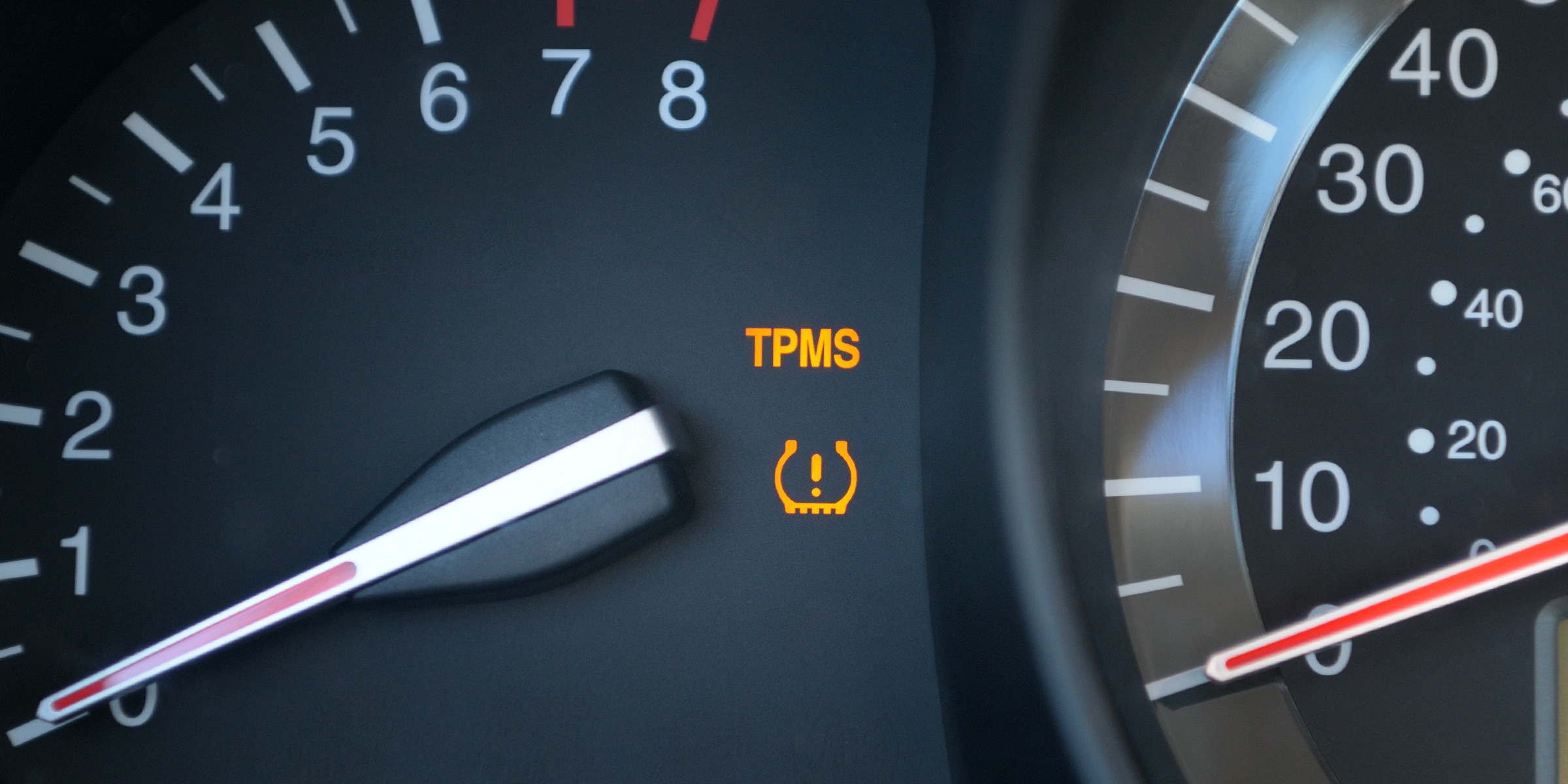
Few dashboard warning lights have ruined more perfectly good mornings than the tire pressure light.
You start your car, glance at the gauges, and there it is. That little yellow symbol stares back at you like it knows something you don't. Is one tire low? Did you pick up a nail? Or is your vehicle just having a bad day?
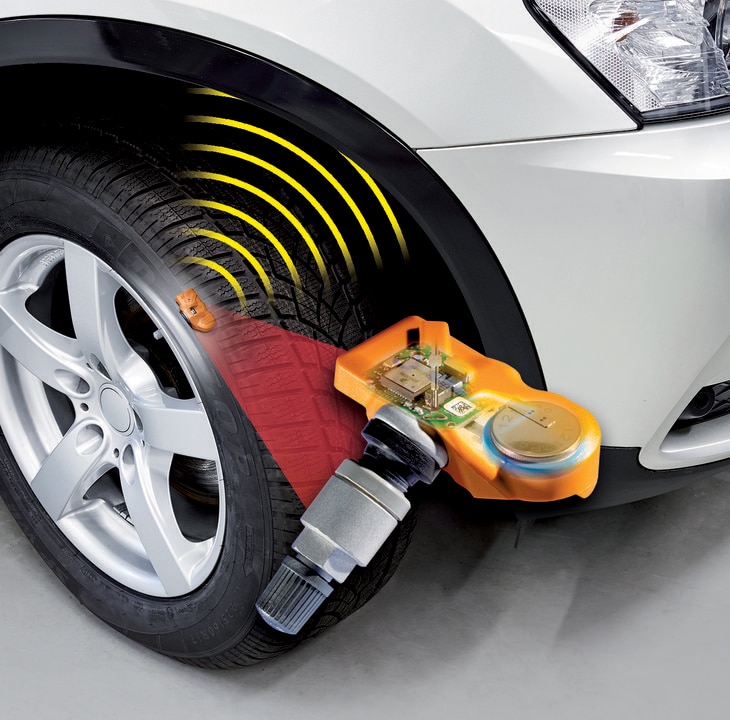
A Tire Pressure Monitoring System (TMPS) is made up of small electronic sensors inside your wheels that constantly measure tire pressure and report that information to your vehicle's computer. When pressure drops below the manufacturer's threshold, the onboard computer immediately activates the warning light.
The sensors are remarkably reliable, but they don't last forever. Here's how they work, how long they typically last, and when it's time to replace them.
What Is TPMS?
TPMS stands for Tire Pressure Monitoring System, and its goal is very simple: to warn drivers before underinflated tires become a safety issue.
Since 2008, every new passenger vehicle sold in the United States has been required by the National Highway Traffic Safety Administration (NHTSA) under Federal Motor Vehicle Safety Standard (FMVSS) No. 138 to include a tire pressure monitoring system.
Proper tire pressure improves handling, braking, fuel economy, tread life, and overall vehicle stability. Rather than expecting drivers to check their tires every week, TPMS continuously monitors tire pressure while you drive.
Keep in mind that while TPMS is an excellent safety feature, it just doesn't replace a good old-fashioned tire gauge.
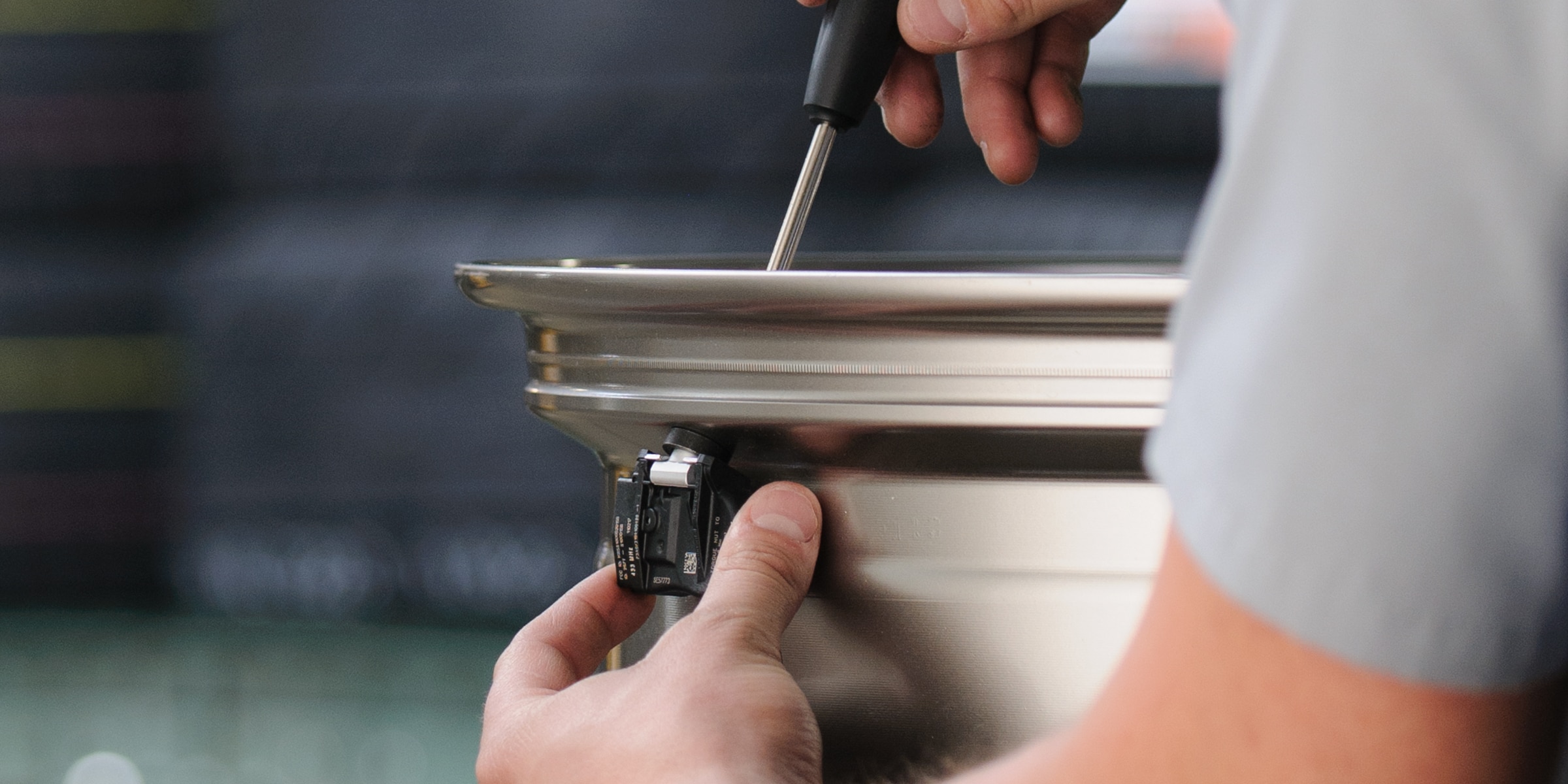
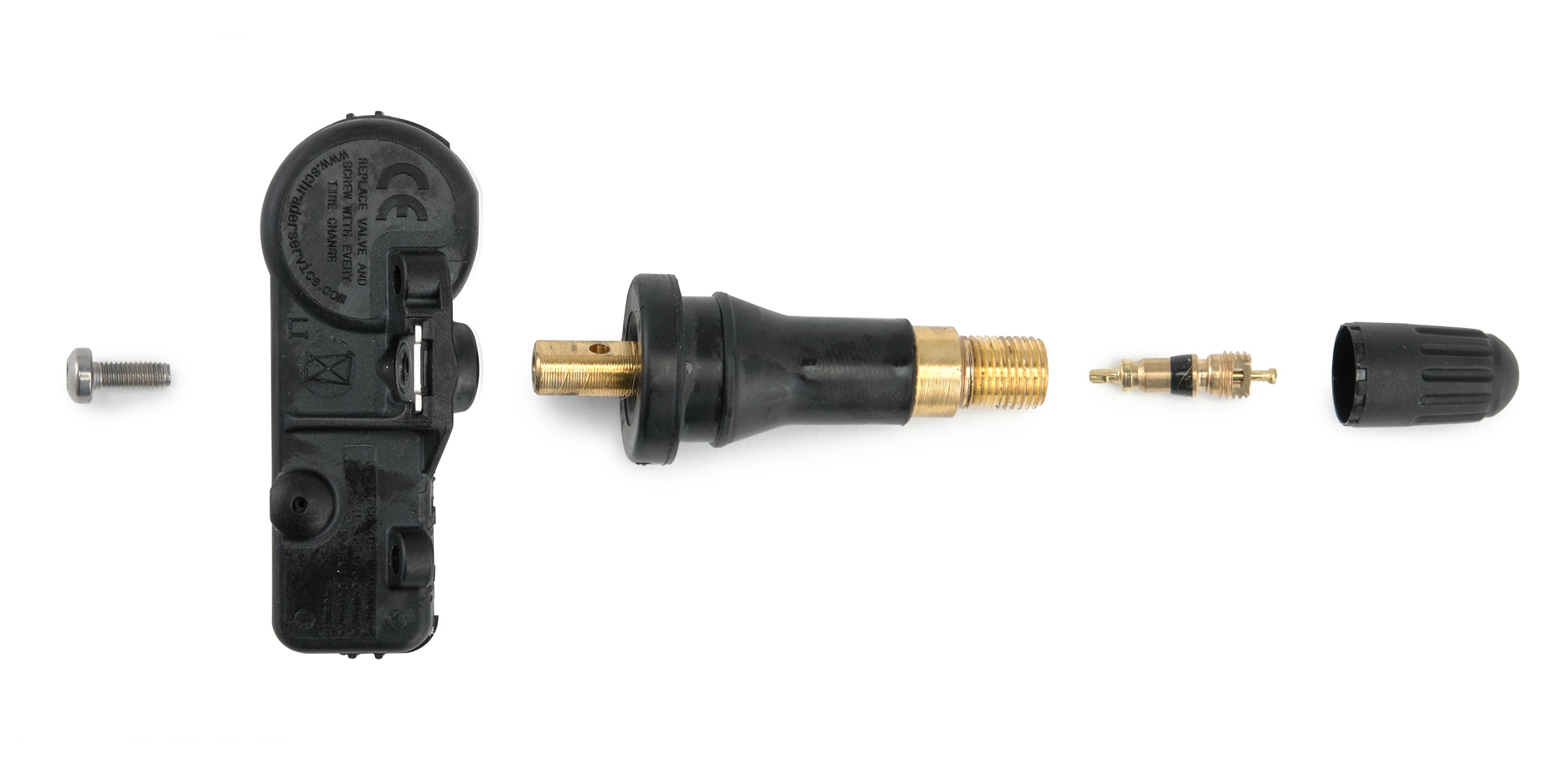
A small electronic sensor is mounted inside each wheel, usually attached to the valve stem. That sensor measures the air pressure inside the tire and wirelessly transmits the information to the vehicle's computer several times each minute.
If pressure drops below the manufacturer's threshold, the TPMS warning light comes on.
Because the sensor is reading pressure directly, this system is extremely accurate.
The downside is that each sensor contains a sealed battery that eventually wears out and can lead to a costly replacement.
Indirect TPMS
Some vehicles use what's called an indirect TPMS.
Instead of measuring air pressure directly, the system monitors wheel speed using the vehicle's ABS sensors.
Here's the idea. A tire that's low on air becomes slightly smaller in diameter, causing it to rotate faster than the others. The vehicle's computer detects that difference and turns on the TPMS warning light.
There are no batteries or pressure sensors inside the wheels to replace but the tradeoff is accuracy.
Most TPMS sensors last seven to 10 years, although battery life varies depending on the vehicle and how often it's driven.
Unlike your key fob, the battery inside a TPMS sensor isn't designed to be replaced. Once the battery reaches the end of its life, the entire sensor is typically replaced. That's why many technicians recommend replacing sensors when installing a new set of tires if the vehicle is approaching ten years old.
Since the tire is already off the wheel, replacing the sensor at the same time usually saves labor compared to doing the job later.
When Should You Replace a TPMS Sensor?
Most drivers don't need to think about their TPMS sensors until something changes.
Common reasons for replacement include:
The sensor battery has reached the end of its service life.
A sensor was damaged during tire service.
The valve stem is leaking or has become corroded.
The TPMS warning light flashes before staying illuminated, indicating a system fault.
One sensor no longer communicates with the vehicle.
If your TPMS warning light remains on after the tires have been inflated correctly, the sensors may need to be inspected.
Before replacing a sensor, always verify the tire pressures first. Inflate all four tires to the pressure listed on the driver's door-jamb placard, not the maximum pressure molded into the tire sidewall. Make sure to drive around on the tires for a short while afterward to give the sensor a chance to turn off.
If the light remains on after inflating your tires and driving around, or begins flashing before returning to a solid state, the problem may be a failed TPMS sensor or a sensor that needs relearn.
TPMS lights may also temporarily come on during temperature changes or altitude changes as you ascend mountain roads, indicating you may be below your car's recommended tire air pressure.
Do TPMS Sensors Need to Be Programmed?
While this answer varies widely from vehicle to vehicle, the answer is usually yes.
After replacing a TPMS sensor, many vehicles require a TPMS relearn procedure so the vehicle knows which sensor belongs to which wheel. Some vehicles perform this automatically after driving, while others require a scan tool or a manufacturer-specific reset procedure.
Because the process varies by make and model, always follow the instructions in your owner's manual or service manual.
Tire Pressure Sensor Frequently Asked Questions
Why is my tire pressure light still on after filling my tires?
First, confirm every tire is inflated to the pressure listed on the driver's door-jamb placard. Some vehicles also require a short drive or TPMS reset before the light turns off. If the warning remains, a TPMS sensor may have failed or require a relearn procedure.
What does TPMS mean?
TPMS stands for Tire Pressure Monitoring System. It uses sensors or wheel-speed data to warn drivers when tire pressure drops below the recommended level. In theory, TPMS is meant to warn you when a tire's pressure becomes too low so you can correct the problem. It's important to know though that damage to your tire is possible before the light comes on which can affect handling, braking, tire wear, or safety.
What is TPMS?
TPMS is a vehicle safety system that monitors tire pressure and alerts the driver when one or more tires become underinflated. There are many different types of TPMS, so check out our different types of TPMS overview for more details.
How do you reset a tire pressure light?
Many vehicles automatically reset the warning light after the tires are inflated correctly and the vehicle has been driven. Others require a reset through the vehicle's settings menu or a TPMS relearn procedure. Always consult your owner's manual for the correct method.
Keep Your Tires Performing Their Best
Your TPMS is one of your vehicle's most valuable safety systems, but it's only part of the equation. Regularly checking tire pressure, inspecting your tires for damage, and replacing worn tires when needed all help keep your vehicle performing the way it was designed.
Before placing your order, be sure to check the latest Tire Rack Special Offers for savings on your new set of tires. For additional peace of mind, we also provide free two-year Road Hazard Protection.
With over 10,000 approved and trusted installers across America, you’re in excellent hands.
World-Class Customer Care
Need help? You’ll reach a U.S.-based team whose expert guidance helps drive Tire Rack’s Net Promoter Score of 86.5*, well above the 80+ benchmark for “world‑class.”
*May 2026
Revolutionizing Tire Buying Since 1979
From our first location to launching nationwide mail order to creating TireRack.com, we believe in bringing you The Way Tire Buying Should Be.™
Independent Tire Testing Program
We test tires on the road and on our specially designed track to simulate real-world dry and wet conditions. Independent, unbiased results to help inform your choice.
Real Drivers. Real Miles. Real Talk.
Tire Rack verified customer reviews come backed by over 3.4 billion real-world miles.
Need help choosing the right products for your vehicle? Our US-based team of highly trained experts has the knowledge and passion to help. Just pick up the phone and give us a ring. Or let's chat via email. We love solving problems and lending a hand (or an ear).

 Orders