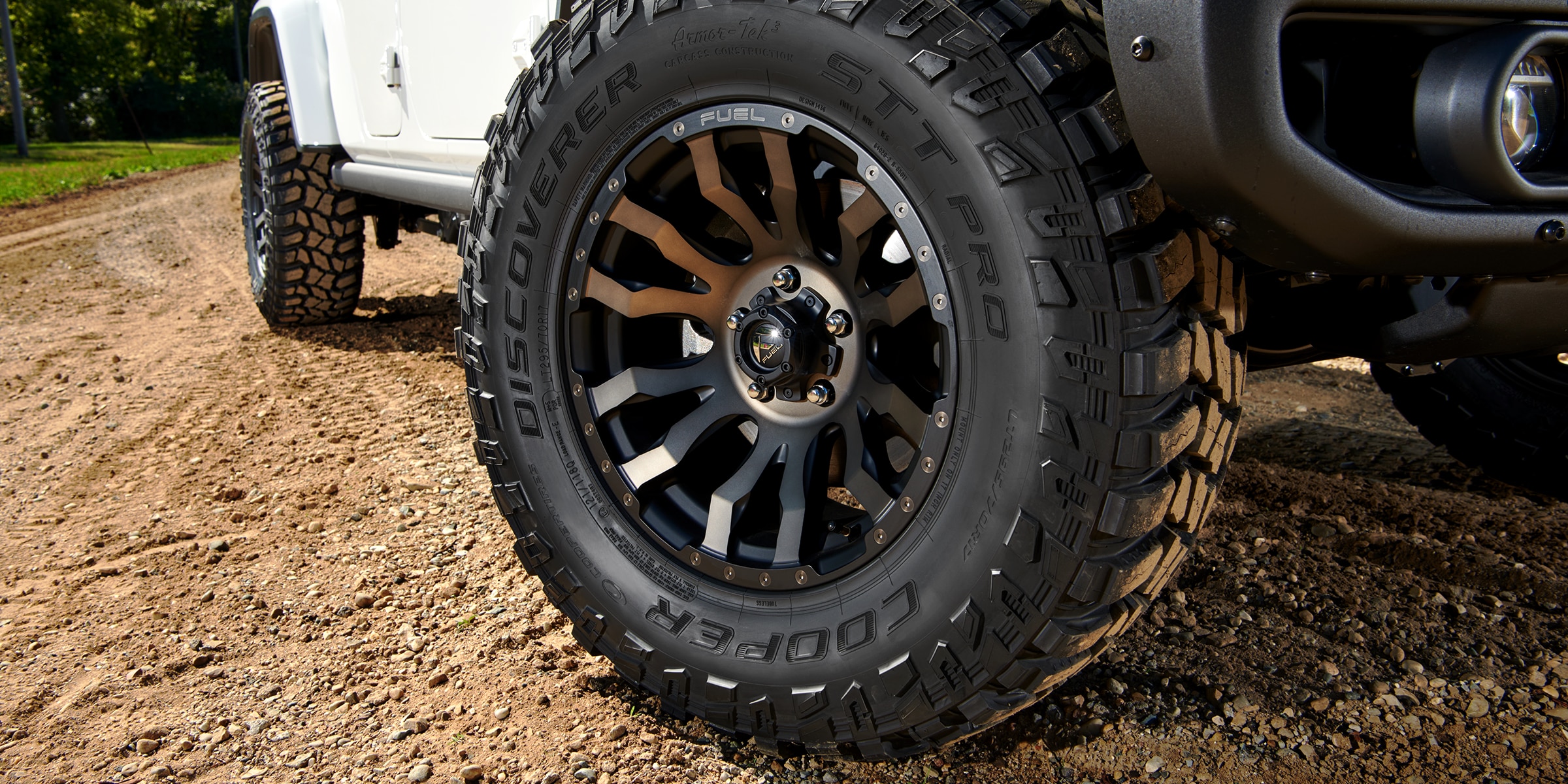
A tire's most important job is to carry the load required of it, and the load range/ply rating branded on the tire's sidewall indicates how much load the tire is designed to carry (at a specific pressure). Whenever changing tire sizes or from one tire type to another, it's important to ensure the load index of the replacement tire is the same or greater than the original tire and that the new tire is rated to carry the load of the vehicle.
Passenger Tires
Since most P-metric passenger tires are manufactured in the standard load range, they will have nothing branded on their sidewalls or may be branded standard load and identified by an SL in their descriptions, as in P235/75R-15 SL.
Light load P-metric tires will be branded light load, and identified by an LL in their descriptions, as in P285/35R-19 LL.
Extra load P-metric tires will be branded extra load, and identified by an XL in their descriptions, as in P235/75R-15 XL.
Note: Only P-metric sized tires with 45-series aspect ratios or lower may be manufactured in a light load configuration. Light load tires are designed to carry less weight than standard load tires and have been developed for specific applications "typically when relatively large tire sizes are used as Original Equipment (O.E.) on relatively small cars or for Track & Competition DOT tires are used for racing applications."
| P-Metric Passenger Vehicle Tires |
|---|
| Load Ranges | Abbreviated | Maximum Load Pressure |
|---|
| Light Load | LL | 35 psi (240 kPa)* |
| Standard Load | Nothing or SL | 35 psi (240 kPa)* |
| Extra Load | XL | 41 psi (280 kPa)* |
|
Standard Euro-metric tires will have nothing branded on their sidewalls, while extra load/reinforced Euro-metric tires will be branded as such and identified by an XL or RF in their descriptions, as in 305/50R20 XL or 305/50R20 RF. Extra Load tires with the "HL" prefix will feature the "HL" prefix AND XL (or RF) branding. They are rated to carry additional load beyond that of "standard" Extra Load tires of the same dimensions.
| Euro-Metric Passenger Vehicle Tires |
|---|
| Load Ranges | Abbreviated | Maximum Load Pressure |
|---|
| Standard Load | Nothing or SL | 36 psi (250 kPa) |
| Reinforced or Extra Load** | RF or XL | 42 psi (290 kPa) |
| Extra Load with an "HL" Prefix | HL and XL | 42 psi (290 kPa) |
|
Light Truck Tires
Before load ranges were adopted, ply ratings and/or the actual number of casing plies were used to identify the relative strength with higher numeric ratings or plies identifying tires featuring stronger, heavier duty constructions. Today, the ply rating doesn’t indicate the actual number of plies used in the tire. It is simply a rating indicating an equivalent strength of earlier, bias-ply tires.
Light truck tires are often available in multiple load ranges, so the appropriate load range is identified immediately following the size's rim diameter in Tire Rack's descriptions.
LT-metric, LT-flotation and LT-numeric tires are branded with their load range (load range E or LRE) or their ply rating (10 ply rated) on their sidewalls and list their appropriate load range letter in their descriptions as LT245/75R-16 E, 7.50R-15 D or 31x10.50R-15 C. LT-sized tires featuring section widths of 305mm/12.50" or wider have their maximum loads and cold tire pressures rated at reduced maximum load pressures.
| Euro-Metric Commercial Vehicle/Van Tires |
|---|
| Load Index | Maximum Load Pounds | Maximum Load Pressure |
|---|
| 116/114 | 2,705/2,600 | 69 psi (475 kPa) |
| 118/116 | 2,910/2,755 | 75 psi (525 kPa) |
| 121/120 | 3,195/3,085 | 83 psi (575 kPa) |
Euro-metric commercial vehicle/van tire dimensions end in a C (signifying commercial), such as 225/75R16C. Differences in load capacities and maximum pressure are identified by their load index and the maximum load/pressure for single/dual applications branded on their sidewall. The example provided above is for single/dual applications of a 225/75R16C size tire.
Special Trailer Service Tires
Special trailer service tires are often available in multiple load ranges. The appropriate load range is identified immediately following the size's rim diameter in Tire Rack's descriptions.
ST-metric sized special trailer service tires will be branded with their load range (load range D or LRD) on their sidewalls and list their appropriate load range letter in their descriptions as ST205/75R15 LRD.
| ST-Metric Trailer Service Tires |
|---|
| Load Range | Ply Rating | Markings | Maximum Load Pressure |
|---|
| B | 4 | B | 35 psi (240 kPa) |
| C | 6 | C | 50 psi (350 kPa) |
| D | 8 | D | 65 psi (450 kPa) |
| E | 10 | E | 80 psi (550 kPa) |