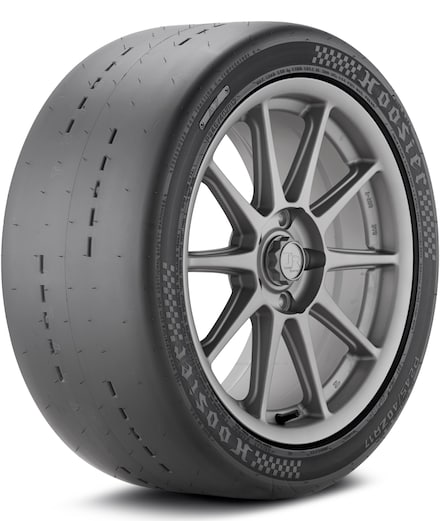
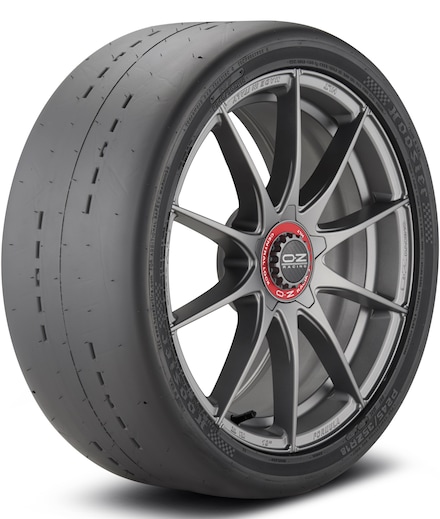
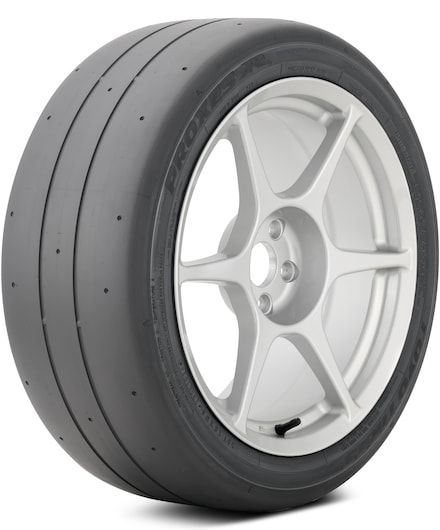
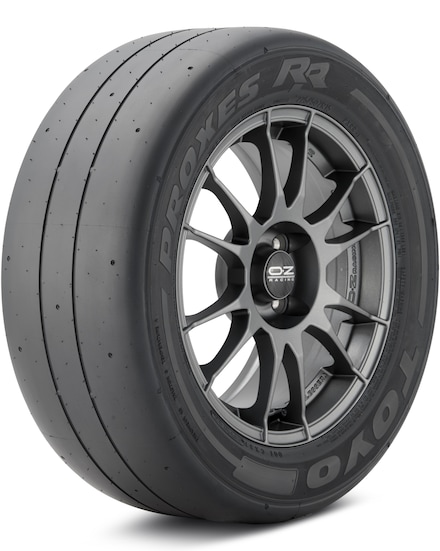
Many tire manufacturers use very aggressive tread compounds for the Track & CompetitionTrack & Competition DOT-legal tires they've developed for autocrossing, track days and road racing. And just like other high performance parts, these tires will provide more consistent performance and last longer if they are properly broken in.
The first time track & competition DOT tires go into service is very important. All tires deflect under load, and their tread rubber compounds repeatedly stretch and relax as they roll into and out of contact with the road. This stretching breaks some of the weaker bonds between the tread rubber molecules, generating heat. If new DOT performanceperformance tires are initially run too aggressively, too hot or too long, some of the stronger bonds will also be broken, which reduces tire grip and wear.
Putting new track & competition DOT tires through an easy initial heat cycle and then not running them for a minimum of 24 hours allows the rubber bonds to relink in a more uniform manner than they were originally manufactured. Heat cycling actually makes track & competition DOT tread compounds more consistent in strength and more resistant to losing their strength the next time they are used.
While it's important to heat cycle tires, how it's done isn't as important.
Tire Heat Cycling: On the Track
Heat cycling can be done by installing tires on the car and running 10 to 15 minutes on a racetrack. Start with easy laps, and build up speed as the session continues. End up running 5-10 seconds off your normal pace and be careful not to spike the tire temperatures by spinning, sliding or locking the tires.
An important step in tire heat cycling is that after being brought up to temperature, the tires require a minimum of 24 hours to relax and relink the bonds between the rubber molecules. Drivers attempting to heat cycle tires in the morning for use a few hours later in the afternoon will not experience any benefits from the morning attempt at heat cycling. Heat cycling tires on Saturday means not using them again until the same time on Sunday.
Tire Rack's Heat Cycling Service
Our heat cycling service begins by mounting the tire on an appropriate-width wheel and inflating it to the desired pressure. It is then placed in our heat cycling machine which has three rollers positioned at the corners of a triangle. The tread flexes where it comes into contact with each of the rollers, stretching the rubber compound enough to progressively bring it up to temperature all the way around the tire and across the tread. There is no artificial heat added by an oven, forced air or heat lamp.
The tread temperature is monitored with a pyrometer to confirm when the tire has reached the desired 170-180° F temperature. The tire is then dismounted and stamped as Tire Rack heat cycled. Since the minimum 24-hour waiting period typically occurs while the tires are in transit, the tires are ready to use when they arrive!
The only thing our heat cycling service doesn't do is scuff in the tires.
Most popular track tires we heat cycle
Hoosier A7
Designed for autocross with very high grip and quick warm-up
While both ways will get the job done, many driving enthusiasts have chosen Tire Rack's heat cycling service because it allows them to maximize their time on the track. They don't have to invest in extra sets of wheels to manage multiple sets of tires, nor dedicate early weekend sessions to heat cycling new tires for the following days.
We've compared tire heat cycling done on our test track and in our heat-cycling machine. Measuring the tread temperatures with a probe-style pyrometer has confirmed we can't quite duplicate the heat cycling machine's controlled process with tires mounted on a car. We found on-the-car heat cycling was challenged by different driveline configurations (front-wheel, rear-wheel or all-wheel drive), vehicle weight distributions and competition camber settings that made it difficult to generate even tire temperatures on front and rear axle positions, as well as across the entire tread. Our heat-cycling machine allowed us to achieve appropriate and more consistent temperatures across the tire's tread without causing treadwear.
The cost of heat cycling is $25 per tire and is recommend by competition tire manufacturers.
Need help choosing the right products for your vehicle? Our US-based team of highly trained experts has the knowledge and passion to help. Just pick up the phone and give us a ring. Or let's chat via email. We love solving problems and lending a hand (or an ear).