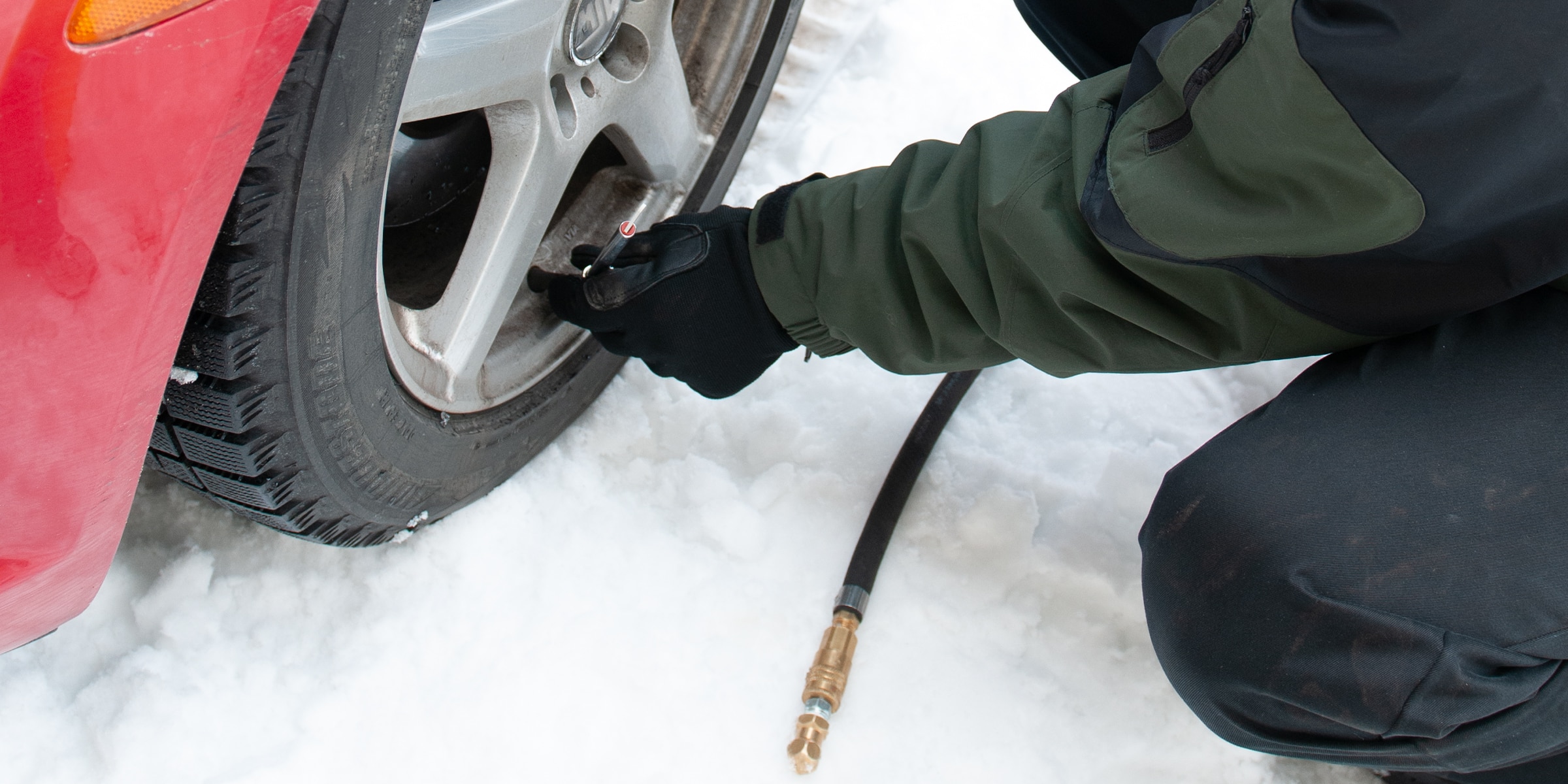
Several vehicle manufacturer's owner's manuals recommend operating winter tires winter tires several psi (typically 3-5) higher than their recommended pressures for summer and all-season tires. While none of them actually provide the reason why, there are several scenarios that would support the practice.
First and foremost is that winter tires feature more aggressive tread designs, softer tread compounds and are often molded with deeper beginning tread depths than summer or all-season tires. While the combination of these design elements allows winter tires to remain more pliable in sub-freezing temperatures to provide more traction in snow and on ice, it often results in tires that have somewhat reduced responsiveness to driver input. The 3-5 psi higher recommended inflation pressures increase tire stability and help offset the reduction in responsiveness.
Additionally ambient air temperatures in winter typically range 40- to 50-degrees Fahrenheit colder than typical summer temperatures for the same location. The lower ambient temperatures allow tires to be more efficient at radiating heat and the tires will run cooler, building up less hot tire pressure. In this case, the 3-5 psi higher recommended inflation pressure increase helps offset the reduced hot tire pressures resulting from less heat buildup.
And finally, all tire pressures are intended to be measured cold, which means when the tires are at the same temperature as the air outside. Unfortunately, unless you park your vehicle outside or in an unheated, detached garage, and measure its tire pressures first thing on dark, cold mornings, the influence of attached garages or higher ambient air temperatures later in the day often means that drivers are actually measuring tires that are not completely cold. In this case the 3-5 psi higher recommended inflation pressure increase helps offset the reduced tire pressures associated with the conditions in which the tire pressures are typically measured.
You may also want to read "Air Pressure: When and How to Set"

 Orders