Spider Chart Comparison
Want to really get down to it with the data? Try this head-to-head comparison. When favorites are selected, this chart will default to showing favorites first.
Test Report
Introduction
One of the largest emerging vehicle segments over the past decade, CUVs/crossovers like the Toyota RAV4, Honda CR-V, Chevy Equinox, Hyundai Tucson, Tesla Model Y, and most Subaru models have become some of the most popular vehicles on the road. There are a multitude of reasons for this rise, none of which are particularly germane to this test, but the result is the same: there are simply a lot more crossovers and SUVs on the road, and they all need tires. How handy then, that there are several categories dedicated to just that purpose. Several purposes in fact, as CUVs and SUVs serve a variety of functions, from simple people-movers, to dedicated work vehicles, off-roading, and much more.
We've gathered tires from multiple categories and manufacturers to see not just how they compare to each other, but to explore some of the category differences drivers can expect to see. We've done cross-category comparisons before (see the most recent one from 2024), and as the CUV/SUV market only continues to expand, the demand for more testing increases with it.
We'll be looking primarily at Crossover/SUV Touring All-Season tires (CSTAS) in this test, the category equivalent to Grand Touring All-Season tires (GTAS) for cars. Even though GTAS and CSTAS tires are functional equivalents, it's not unheard of to see size overlap between them, which is why the Radar All Season GT is included as well. While Crossover/SUV Touring All-Season tires are the primary focus of the test, we'll also be looking at On-Road All-Terrain tires, another popular choice in this size, and a common pick for all manner of SUV/CUV/trucks. Many drivers enjoy overlanding or have need for some light off-pavement use, and it's worth seeing how much is sacrificed for a bit more versatility compared to a touring tire. Additionally, we have a couple Street/Sport Truck All-Season tires, a slightly more "performance" focused choice.
As usual: we'll introduce each, break down our experiences with them on our real-world road ride, then discuss their traction and subjective behavior on both a wet and dry track to understand how these tires act when pushed to their limits, mimicking the kind of high-speed emergency maneuvers you might need to deal with in a sudden crisis. In addition, each tire undergoes ice and snow testing to determine how these tires handle some of the harshest weather conditions.
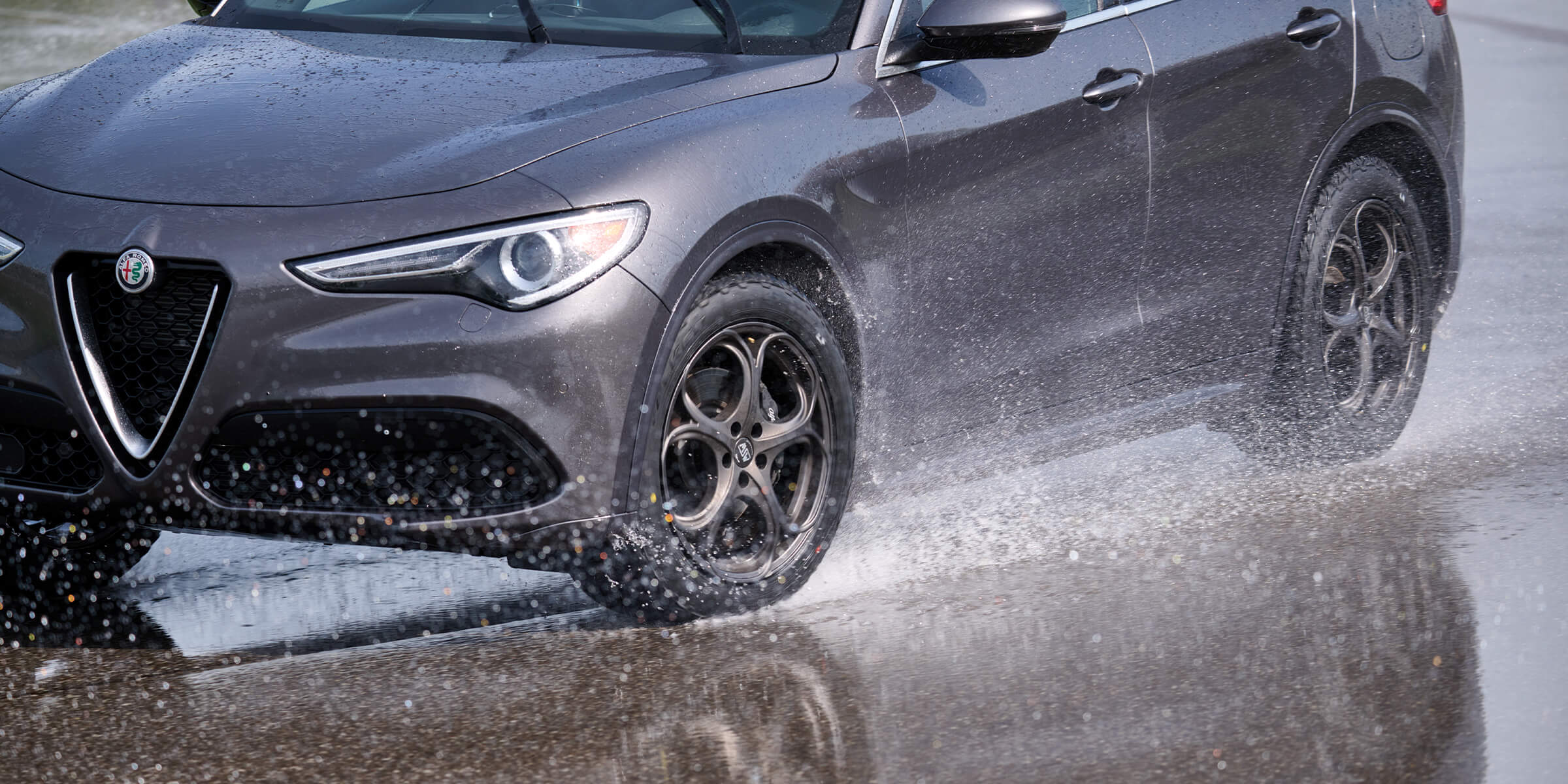
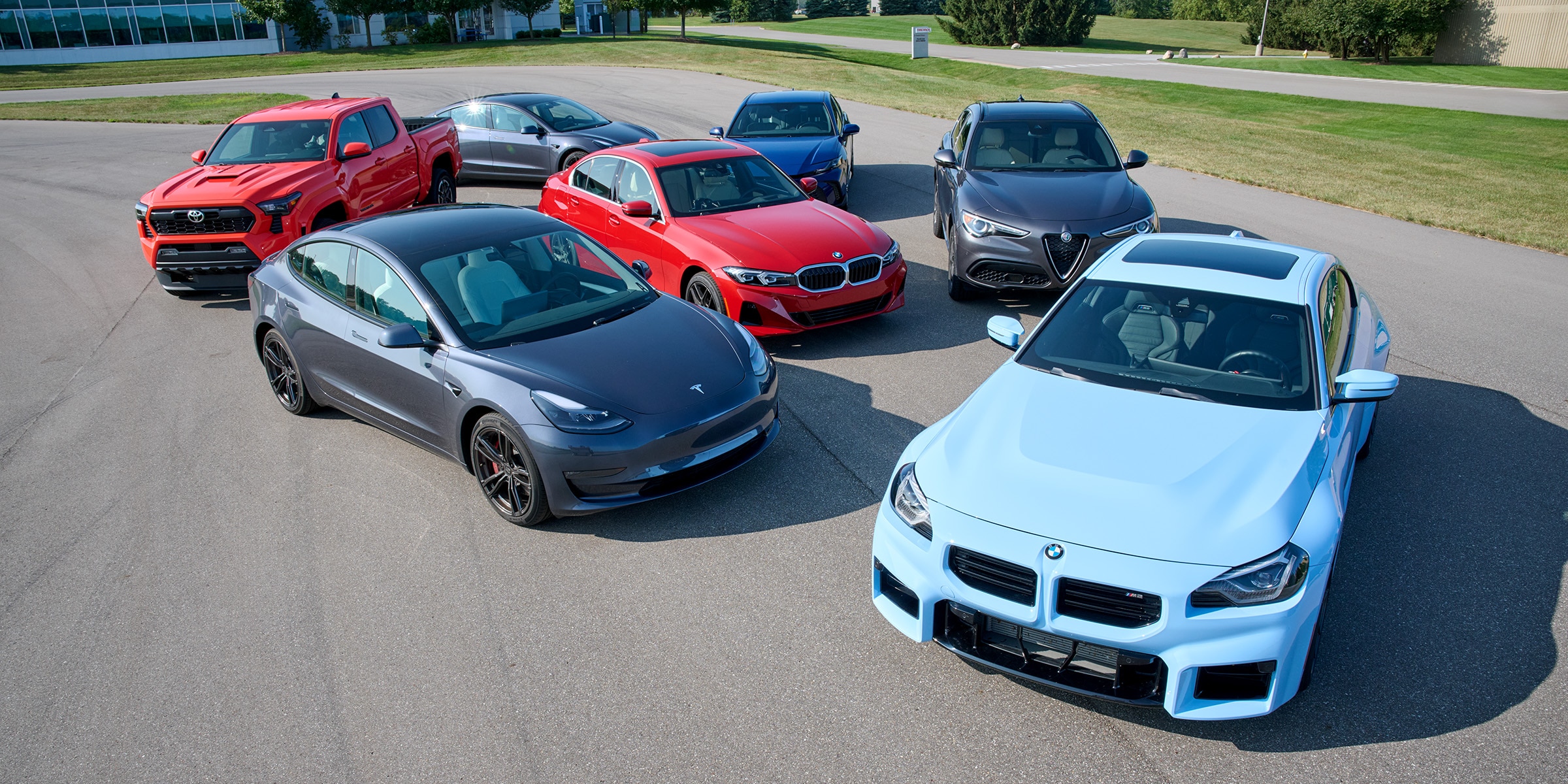
In addition to the limit-pushing data and experience we gather from running laps in our Alfa Romeo Stelvio, this test will reference our "Emergency Lane Change" (ELC) maneuver. On the dry track surface, from a target speed of 45 miles per hour, our drivers will pass through 3 sets of cones to illustrate how the tires handle the kind of sudden, reactive swerves a person actually makes in an emergency situation. The 1st set indicates the point a person would react to an obstacle (such as a stopped car or pedestrian) leaving the "lane." The 2nd set is the target placement to avoid the obstacle, indicating the lane change has succeeded. The 3rd set of cones represents the successful target for returning to the "lane." Afterward, we complete a dry lap to get a feel for their behavior, similar to our wet driving, without a timed component.
-
- Total Overall Rating: 5.87/10
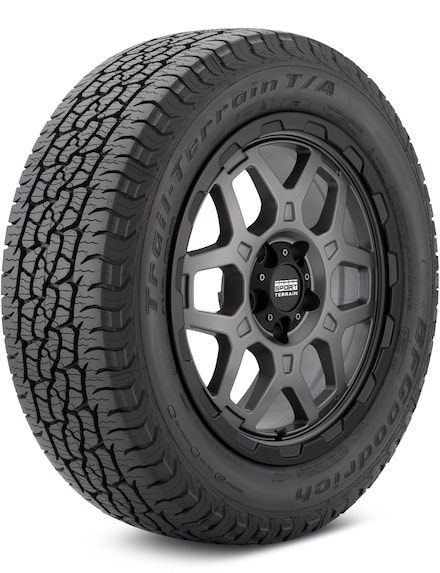
One of the two All Terrain tires in this test, the Trail-Terrain T/A has been a popular choice for drivers looking for a tire with light off-road capability that still retains paved road civility for the majority of its use.
Road Ride: During the drive, we found it to be cushioned, but lacking in composure. Impacts created vertical movement, which made it feel loose, bouncy, unsettled. It did a fine job rounding over hits, but that was the trade-off here. There was also a bit of a boom over impacts, and interior noise carried a deep, bass-heavy tone that resonated at higher volume and was difficult to ignore, accompanied by some mid-frequency tones on coarse surfaces. Steering response was slow and imprecise around center, with limited feedback and weak self-aligning torque, contributing to a generally vague and unrefined feel at low and highway speeds alike.
Wet Track: Traction was low enough in the BFG that we had two options: slow down significantly, or switch to a full point-and-shoot approach just to get around cleanly, and even with that concession, lap times suffered. Braking went straight to ABS with minimal pedal pressure and still wanted to overshoot corner entries. Turn-in consistently led to front-end push, and any attempt to blend steering, throttle, or brake inputs resulted in immediate loss of traction. Thanks in no small part to the vehicle's all-wheel drive system, it could accelerate decently in a straight line, but otherwise felt disconnected and uncoordinated.
Emergency Lane Change: It passed the maneuver once, and that single "success" was sideways and unstable. Traction was low, and any input beyond a gradual steering motion caused it to wash out immediately. Mid-turn offered little confidence or recovery. Braking was especially weak and was quick to engage ABS.
Winter: With snow underneath the Train-Terrain T/A, it showcased impressive braking and acceleration - stopping in 74.2 feet from 25 mph and accelerating to 12 mph in 21.83 feet - very good, not just for its category, but the second-strongest objective numbers in the test as a whole. It was nice for making speed and shaving it off, but not quite as commanding outside of a straight line. To both its credit and detriment, all four tires would break traction at the same time when limits were reached, which was predictable and fairly quick to recover, but it also meant that... well, all four tires broke traction, so our drivers were along for a short 4-wheel drift before it came back. Still, one of the better experiences of the test. Ice performance was also strong, stopping from 12 mph in 47.8', the shortest braking distance in the test.
-
- Total Overall Rating: 7.59/10
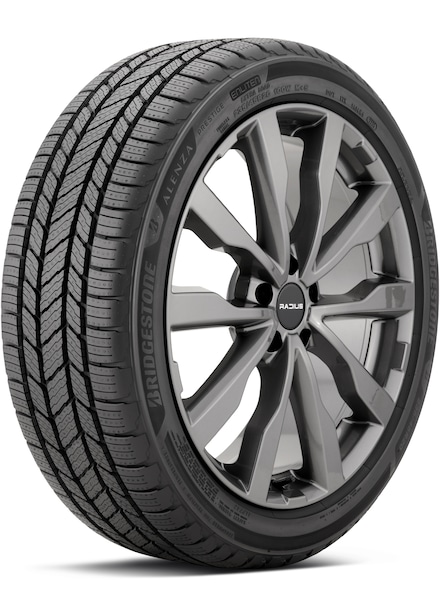
One of the newest releases in this test, the Alenza Prestige is barely a month on the market as of this writing. Bridgestone's latest crossover tire category entry was one we were eager to drive and compare.
Road Ride: During our drive, the Turanza Prestige came across ever so slightly firmer than the Turanza Everdrive, with small bumps feeling a bit sharper, and the larger hits landing with a little more presence - nothing jarring, just a touch more noticeable. Noise was handled differently between the two tires, with the Turanza Prestige trading its sibling's variety of tones for a steadier bass note on smoother pavement. Steering felt pleasantly more weighted on center, requiring deliberate inputs to move it off line.
Wet Track: Braking was confident, and the Alenza Prestige allowed for useful combination of inputs without immediately losing composure. Cornering grip was high enough to lean on the front end through turn-in and actually carry speed mid-corner. It rotated willingly through transitions, and while traction control would occasionally intervene, we could stay ahead of, or work with it, thanks to that strong grip. Recovery from small slides was quick and predictable, making it easy to stay on top of.
Emergency Lane Change: The front end had good authority and responded well to quick steering inputs. Recovery from mild understeer was predictable and mostly quick. One attempt failed when the tire seemed to give up too early. Braking felt decent, and overall, it simply felt solid through the ELC and passed seven out of eight attempts.
Winter: Snow proved little difficulty for the Alenza Prestige in longitudinal testing, stopping from 25 mph in 79.1 feet and accelerating to 12 mph in 22.81 feet. While not the best in the test, it wasn't bad to drive as a total package. Its behavior at the limit worked well with the Stelvio. It was controllable, if not authoritative, and could be glided around and placed where we wanted it. Ice braking was okay for this Bridgestone, a 52.9' stop from 12 mph put it toward the lower end of the spectrum, but several notches up from last.
-
- Total Overall Rating: 6.99/10
The Endeavor Plus is the older of the two included Cooper tires, a popular all-season option, and a suitable comparison for the newer TractionCommand.
Road Ride: Generally comfortable, good composure over larger impacts and only a hint of jiggle afterward. Noise levels were acceptable but not particularly refined. The mid-frequency tones were joined by a subtle low-frequency hum that made them more noticeable, especially on smoother asphalt or concrete. Still, it stayed within a reasonable range overall. Steering was quick and precise, giving the tire a crisp, connected feel on center. At highway speeds, that immediacy bordered on nervous, requiring small corrections to keep it settled, but the payoff was clear, responsive handling.
Wet Track: Grip was one of the main limiting factors of the Endeavor Plus, with the traction control systems clamping down quickly and restricting how much could be done with the throttle or rotation. Braking caught us off guard a couple of times, especially after coming off stronger products. The front end was acceptable, but the rear demanded patience; getting back to power too soon would trigger rotation and a quick traction control response. Steering feel was decent, but the pervasive lack of overall grip kept it from being any better than average.
Emergency Lane Change: It passed the maneuver every time. Initial steering response was quick and confident, giving an immediate sense of control, though there was a slight delay before full grip came in to complete the maneuver. Still, traction was decent, and it was more than enough to get the job done at 45 mph. Around the rest of the lap post-maneuver, it continued to feel composed and predictable.
Winter: Snow was not much kinder to the Endeavor Plus than previous environments: it took the second-furthest to stop in the snow in the test, just past 105 feet from 25 mph and over 25 feet farther than some of the best of the test, a genuinely remarkable difference. It wasn't much better to drive around the snow course either, with very minimal grip to work with, the experience felt disconnected, floaty. There was no real front end authority, the rear end was wiggly to put it mildly, and we could feel the Stelvio's safety systems engaging regularly just to keep the vehicle vaguely in line. The Cooper Endeavor Plus was equally poor on the ice, taking 58.5' to stop from 12 mph, functionally tied with the worst in the test.
-
- Total Overall Rating: 6.81/10
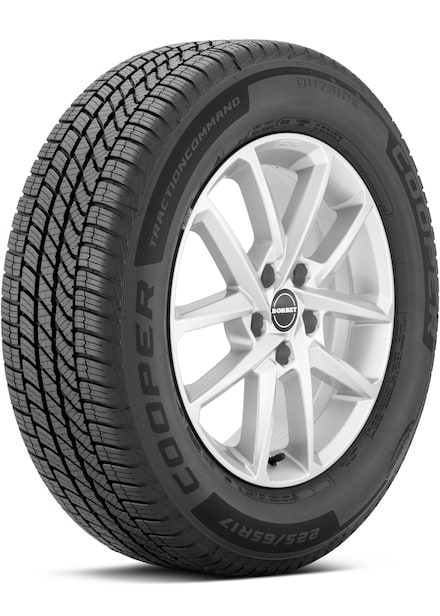
Another brand new tire to the Crossover/SUV Touring All-Season category, Cooper's TractionCommand sports an interesting spin on an asymmetric tread design, as well as the three-peak mountain snowflake symbol (3PMSF) to provide another compelling all-weather option for consumers.
Road Ride: Ride quality was acceptable overall, if a bit unsettled over sharper hits, and produced a mild jiggle on repeating bumps. Noise control was fair overall, impacts over cracks tended to resonate slightly through the cabin, with a low "bong" over medium-sized impacts, as well as some mid-frequency tread hum that varied slightly, but none of it was overly intrusive. Steering was appropriately weighted and reasonably precise, offering consistent response without feeling sporty or particularly lively. It felt calibrated for comfort and predictability rather than engagement, which suited the tire's character well.
Wet Track: The TractionCommand felt deceptively capable at first; it would turn in well and even hint at some rotational capability, but the available traction just wasn't there to support it, and traction control stepped in early to shut things down. Braking showed the same pattern: good initial bite and deceleration before tapering off, leading to a few missed zones. Up near the limit, it pushed wide and found the outer cones more often than we would like to see. There was some athleticism in how it responded, but not enough grip or consistency to make it feel locked down.
Emergency Lane Change: It felt like the steering and tire characteristics were well-mated with one another. It reacted quickly, it was alert through the maneuver, even if it slightly exaggerated steering inputs at times. Grip was solid, and while not sharp or particularly satisfying, it delivered what was needed with consistency and control, which was ultimately what mattered, passing the Emergency Lane Change on 7 out of 8 attempts.
Winter: In sharp contrast to its sibling, the TractionCommand started off strong with a test-leading 25-0 stop in the snow, at 69.5 feet, besting even the closest tire by just under 5 feet, as well as the best acceleration to 12 mph in just under 21 feet. It only built further confidence with us on the snowy track, letting us toss it into corners with more aggression than almost anything else in the group while keeping everything stable and composed. The rear end stayed planted and predictable, allowing us to carry solid entry speed, let it slide a touch sideways if we wanted, glide smoothly to the exit, then power out cleanly. During ice braking from 12 mph, the TractionCommand stopped in 49.3', one of the better options in the test and one of only 4 tires to do it in under 50'.
-
- Total Overall Rating: 6.82/10
Falken's WildPeak A/T Trail has been, and continues to be, a popular All-Terrain option for a wide range of drivers, from those simply looking to sport a more rugged look, to those who intend to take their vehicle off the beaten path - something the WildPeak A/T Trail was specifically designed to do.
Road Ride: Leaning toward the firm side of ride stiffness, there's slight vertical movement, but it stays nicely composed overall. Noise levels were acceptable, though it produced a bit of low-frequency pattern hum (like many others in this group), along with some added resonance on coarse or cross-cut concrete. On the highway, there's a faint, but consistent tones from the tread interacting with the road surface that became more noticeable with speed. Steering feels well-tuned: stable and balanced around center, with a steady response rate that makes it feel natural and predictable.
Wet Track: Traction wasn't especially strong, but the tire made the most of what it had, remaining balanced and predictable for the most part. The rear would step out before the front, though it did so progressively rather than abruptly. It was nice to not have to constantly manage front-end push, even if a little more overall grip would have helped unlock its full potential. Not the best of the group, but solid and confidence-inspiring enough to work with.
Emergency Lane Change: The steering feel was one of the more stand-out elements of the WildPeak A/T Trail during the ELC and dry lap: it felt mostly balanced, responsive. Mid-corner we would have liked a bit more, but part of that might have been the slightly lacking traction. It passed 6 out of 8 attempts, with a couple runs flirting with the edge of the track.
Winter: In longitudinal snow testing the WildPeak A/T Trail was middling, objectively fine: 79.2 feet to stop from 25 mph, 22.81feet to accelerate to 12 mph, not great, not bad. Actually driving on the tire was similarly uninspiring though. The front wheels and tires turn, but with no bite, no reaction. Traction control engaged frequently, the lateral grip just was not there to make much of a performance out of these. Ice braking was similarly underwhelming, but not terrible: 52.4' from 12 mph.
-
- Total Overall Rating: 7.28/10
The touring-focused entry from Falken here, the Ziex CT60 A/S has been on the market for some time, and serves as a good benchmark.
Road Ride: It maintained its composure over both large impacts and smaller, repetitive features of the road, keeping everything nicely settled. Noise performance was very good, with minimal pattern noise on smooth pavement and only a mild, distant thud over cracks. On coarse surfaces, there was faint resonance but nothing intrusive, and at highway speeds the cabin stayed impressively quiet apart from the gentle caress of wind. Steering felt appropriately weighted, responding naturally, with just the right amount of quickness to feel refined and confident.
Wet Track: Steering precision was acceptable, but any attempt to apply throttle at the same time immediately overwhelmed available grip. Braking performance was similarly limited, frequently overshooting braking zones, and early engagement of ABS. The Ziex CT60 A/S demanded strict separation of throttle and steering inputs to keep in line, and even then, its responses felt inconsistent and easily upset.
Emergency Lane Change: It passed every attempt with ease, even handling a run that went over the intended speed, at 47.5 mph. Steering felt crisp, direct, and well connected, making it easy to place the car through the track run and around the skid pad. Recovery was quick and controllable. Everything just worked together naturally, giving a sense of confidence and precision behind the wheel.
Winter: As one of the handful in the 100+ feet snow braking club, the Ziex CT60 A/S wasn't much better in acceleration either, taking 34.8 feet to reach 12 mph. It was, frankly, disappointing to drive around the snow track, plagued by low traction that severely limited what even the AWD system could do in corners. We had to baby it around each lap, with slow, smooth, minimal inputs when entering corners, then wait until perfectly aligned and pointed before ever so gently powering out. Coming to a stop on an icy surface took 55.1' from 12 mph, joining the bottom segment of the test overall for winter conditions.
-
- Total Overall Rating: 7.62/10
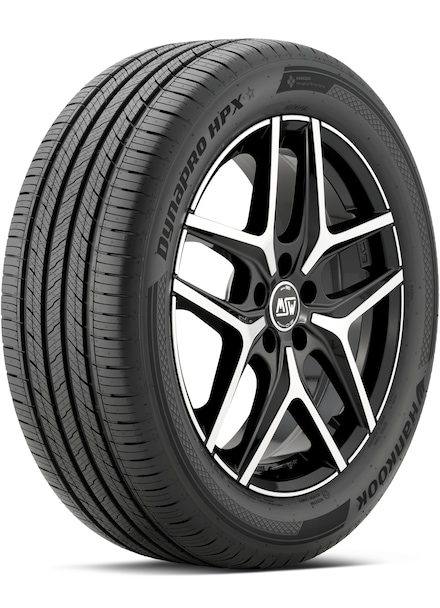
The latest category entry from Hankook, the Dynapro HPX promises quiet comfort, confident all-season grip, and long tread life. Naturally, we wanted to see if its real-world performance matches its claims.
Road Ride: Very nicely balanced, with impacts handled cleanly, succinctly, without any secondary movement. It was comfortable and composed across all surfaces. Noise control was strong, with only a slight increase in volume across most surfaces but blending everything together into nondescript tones that never became distracting, especially at lower speeds. Steering felt solid in the hands, with the right mix of weight and precision.
Wet Track: Traction was strong, braking was able to dig in immediately, and consistently, while steering felt sharp and confident, with good precision on turn-in. It handled transitions through the slalom cleanly and felt balanced, even under aggressive inputs. The traction control worked with the tire rather than against it, allowing more overlap between throttle and steering before intervention. The combination of grip, composure, and responsiveness made it one of the most capable and confidence-inspiring options in the group in the wet.
Emergency Lane Change: The steering was sharp and precise, allowing time to re-center the wheel between gates and complete the maneuver cleanly every run. Braking felt strong and stable, and overall grip ranked among the best in the group. It was easy to push, predictable at the limit, and delivered a composed, high-confidence performance.
Winter: Longitudinal performance wasn't the Dynapro HPX's strongest suit in the snow; it was one of the weaker tires in the sub-100 group, taking 91 feet to stop from 25 mph and 28.35 feet to accelerate to 12 mph. However, once on the track, it displayed very drivable performance that let us use its traits to our advantage within reasonable limits. Traction wasn't incredibly strong overall, particularly lacking a bit more lateral grip than we'd have liked, but it felt capable. The traction control's yaw management was clearly on display: helpful when we stayed composed, quick to lock things down if we got too wild or hit the throttle while sideways, but compared to the slog of earlier tires, this one felt genuinely useful and rewarding to drive. Ice braking took 49.8' to stop from 12 mph, narrowly putting it in the under 50' club.
-
- Total Overall Rating: 7.41/10
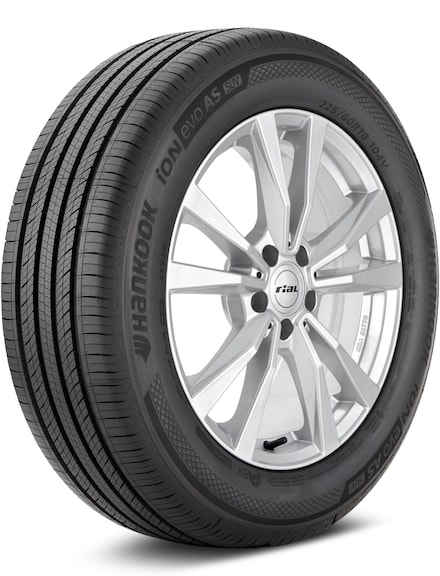
While the "iON evo" line is known for its EV-focus, there's nothing preventing "EV tires" from being used on internal combustion vehicles and vice versa. It's been a common request to test more EV/non-EV tires in both directions, so we're happy to include more of them.
Road Ride: A touch firmer than most of the other options, letting more of the road's imperfections come through. It wasn't harsh, but it didn't hide anything either — every bump was felt cleanly and precisely. Noise levels were decent overall. Over concrete, or any surface with something significant to interact with, it produced a faint two-tone growl with a low front-end grind and a softer, hollow roar from the rear. Though, on smooth pavement, it stayed impressively quiet. Steering response was good, though a touch slower and less direct than some of the test's livelier options.
Wet Track: As a sibling product to the Dynapro HPX, the iON evo AS SUV shared a very comparable feel to it in the wet. There was a similarly strong mix of overall traction and balance, though a bit freer and less "locked down." When traction control did step in, it did so naturally and only as a correction to overambition rather than a limitation of the tire itself. Confident, predictable, and easy to drive quickly.
Emergency Lane Change: Grip was strong overall, though initial turn-in traction lacked a little bite compared to the Dynapro HPX. Both drivers came close to the edge a few times, but the iON evo AS SUV held on and completed every run, even at higher speeds.
Winter: The iON evo AS SUV's straight-line objective numbers put it at 83.2 feet to stop from 25 mph and 24.54 feet to accelerate to 12 mph. Just like in other conditions and tests, it felt very similar to its brand mate, with just a bit of a bump to traction overall. Once again: it was very drivable and well-behaved around the snowy track, not the strongest traction, but everything blended into a tire that felt good to drive. Nicely done. Ice braking was accomplished in 48.2' from 12 mph, gaining an extra foot on its relative and the second-best stopping distance in the test on that slippery surface.
-
- Total Overall Rating: 7.24/10
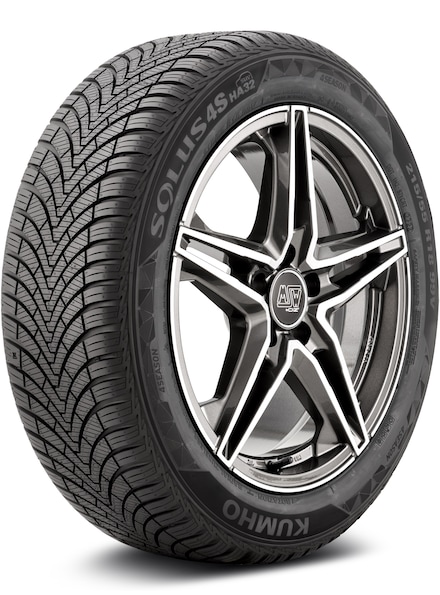
We tested the Solus 4S HA32 earlier this year and were impressed with it on our Toyota Camry, so naturally, testing the CUV/SUV variant of the tire was a no-brainer. As one of the few all-weather entries in this test, we're looking forward to seeing how it handles cold weather too.
Road Ride: The ride was quite a bit firmer than most of the tires tested, but still managed most imperfections without much hassle. Impacts came through as a quick toss and were done, without being too sharp. Noise carried a bit more resonance over the concrete portion of the bypass, with a mild, lingering hum or drone, alongside some tonal variety over most surfaces. Steering felt fine overall, though a little less refined than the best in the group. It reacted quickly enough but came across as if it were working harder to stay composed.
Wet Track: Traction was low enough in the BFG that we had two options: slow down significantly, or switch to a full point-and-shoot approach just to get around cleanly, and even with that concession, lap times suffered. Braking went straight to ABS with minimal pedal pressure and still wanted to overshoot corner entries. Turn-in consistently led to front-end push, and any attempt to blend steering, throttle, or brake inputs resulted in immediate loss of traction. Thanks in no small part to the vehicle's all-wheel drive system, it could accelerate decently in a straight line, but otherwise felt disconnected and uncoordinated.
Emergency Lane Change: It passed the maneuver once, and that single "success" was sideways and unstable. Traction was low, and any input beyond a gradual steering motion caused it to wash out immediately. Mid-turn offered little confidence or recovery. Braking was especially weak and was quick to engage ABS.
Winter: With snow underneath it, the Solus 4S SUV HA32 put up respectable longitudinal numbers, 77.5 feet to stop in the snow from 25 mph, and 25.15 feet to accelerate to 12 mph. The practice of driving it around the track was less encouraging than the numbers would suggest, however. Initial turn-in felt lacking, our drivers would engage the wheel and receive non-responsive understeer instead, which was not exactly confidence inspiring. Once it started sliding, the tires would find grip and catch up, there was decent braking and lateral traction to be found, but the experience felt inconsistent as a whole. Ice braking was also objectively fine, with a 51.6' braking distance from 12 mph.
-
- Total Overall Rating: 7.76/10
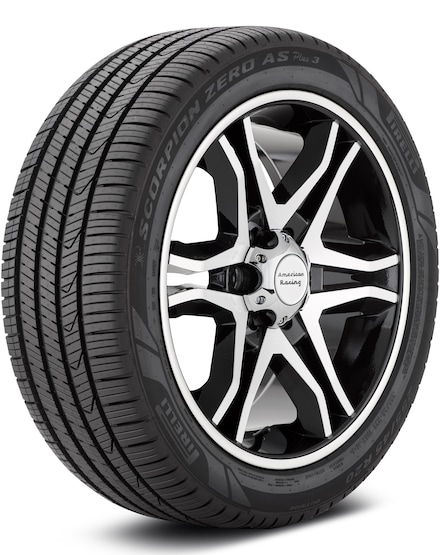
With its Elect branding and PNCS noise-reduction foam insert, the Scorpion Zero AS Plus 3 (Elect) targets electrified trucks and SUVs in the Street/Sport Truck All-Season segment. We included it to evaluate how well it balances traction, refinement, and year-round versatility.
Road Ride: Refined and composed overall, the Scorpion Zero AS Plus 3 (Elect) delivered an ideal mix of comfort, control, and connection. It managed every surface without harshness or excess motion, keeping our Alfa settled and composed. Noise control and isolation were exceptional, easily among the quietest in the test. It absorbed crosscut concrete impressively well, stayed calm at highway speeds, and only revealed some light slaps over cracks, likely because the rest of the experience was so hushed. Steering was equally impressive, with precise initial response and consistent build-up. It wasn't overtly sporty, but appropriately metered, responding to each degree of steering input without feeling so eager it was jumpy.
Wet Track: Another excellent performer worthy of standing with the best. Lateral traction was strong, steering felt precise and connected, and it felt balanced and confidence-inspiring throughout. Power and braking were managed well, allowing for smooth, coordinated transitions. There was some light traction control intervention when rolling back into throttle, but it didn't detract much from the experience.
Emergency Lane Change: Steering felt responsive enough, but overall traction seemed like a slight step down from some of the best. It got the job done, passing nearly every attempt, but it had to lean on its recovery more often than its outright grip. Braking felt solid, but the overall impression was more "competent" than "capable."
Winter: Objective numbers for the Scorpion Zero AS Plus 3 (Elect) were among the low-end for the test in the snow. It took over 100 feet to stop from 25 mph, and a glacial 35.5 feet to accelerate to 12 mph. Once we got it out on the track, the steering response felt good, but it just didn't have the traction to match its dynamics. Everything we attempted resulted in wasted motion, stepping out in the rear, drifting wide in turns, rotating under acceleration or braking. The only option was to slow down significantly and try to stay in line to finish the lap. Ice braking was equally down in traction - 58.8' to stop from 12 mph, the longest distance in the test.
-
- Total Overall Rating: 6.74/10
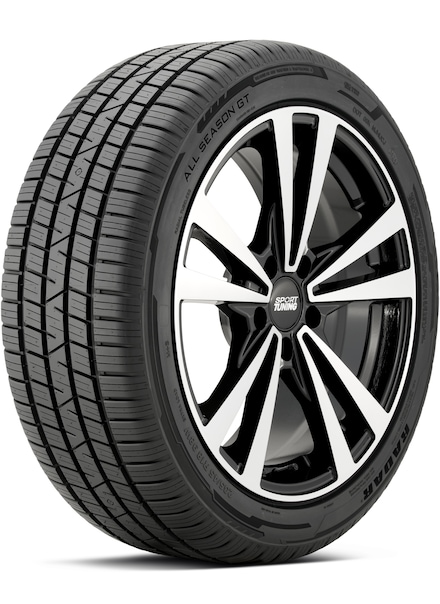
The Radar All Season GT is new for 2025 and while nominally a Grand Touring All-Season tire, its sizing and suitability for crossovers make it a relevant contender in this group.
Road Ride: Definitely on the stiffer end of the equation without being uncomfortable, it managed impacts cleanly, without excess movement. It was good, but not great. Good enough. Noise was its weakest trait. While also not terrible, comparatively, it produced more volume and pattern presence than most, especially over smoother surfaces. It developed a steady propeller-like hum over asphalt. Steering was a bright spot. It felt appropriately responsive across low and high-speed driving, and nicely weighted. It went a bit light mid-corner, but initial turn-in was sharp and confident.
Wet Track: The rear was constantly trying to displace the front. If there was a corner, it wanted to come around on its own. Skid pad, slalom, 180, it didn't matter. The steering itself was fine, but overall grip was among the lowest in the group. Outside of its tendency toward oversteer, the All Season GT's behavior wasn't terrible, but that was mostly because there wasn't enough traction to do much else but slow down.
Emergency Lane Change: The steering felt responsive and capable, but the tire didn't have the extra sharpness or grip to make the maneuver look effortless. It completed 6 of 8 attempts, which was respectable, but it took a moment to settle and regain grip after the second gate. Still, it had enough composure and control to get the job done most of the time.
Winter: The All Season GT narrowly missed joining the 100 feet and over group for braking distances in the snow from 25 mph, but at 96.8 feet, that wasn't much of a win. It was evident that it just did not have comparable traction with the upper echelon tires we tested, and that feeling continued around the track. It had a pronounced tendency to hang the rear end out and make the car feel like a drift machine rather than a predictable daily driver. The Radar's front end feeling was vague, offering little ability to keep the rear settled without traction control intervening aggressively, and even with traction control active, the rear still swung wide before it could rein things in. While our professional test drivers could coax speed out of it by playing into the slide, it was hardly customer-friendly and made for a frustrating, uncomposed choice in snow-covered conditions. Ice braking wasn't particularly strong either, taking 53.5' to stop from 12 mph.
-
- Total Overall Rating: 6.96/10
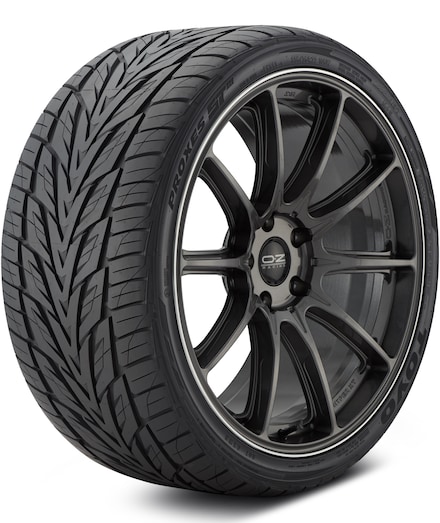
The Toyo Proxes ST III has long been a staple in the Street/Sport Truck All-Season tire segment, making it a natural benchmark for evaluating newer entries in this test.
Road Ride: It's a common refrain, but another tire with a firm ride - but one that controlled motion well, minimizing any excess motion or noticeable impacts. This Toyo's pattern noise was also nicely managed with only scattered issues: at highway speeds (on the asphalt), there was some multi-tonal interaction, but nothing that rose to really egregious levels or couldn't be drowned out by a low radio. Steering was also commendable, there was a bit of play on center, but response came on quickly once the tire engaged.
Wet Track: Pretty good overall. Not quite on the level of the top performers in the wet, but respectable. Steering felt confident and direct, and overall traction was solid. It allowed for some controlled rotation, but traction control intervened quickly if asked for much more. Competent and balanced without major flaws.
Emergency Lane Change: The Proxes ST III was fine, but not much more than that. The steering felt a little delayed, like the tire's construction wasn't fully in sync with what was being requested of it. It didn't like being rushed or asked to do too much at once, and transitional maneuvers showed that. If we separated our inputs and gave it a beat between steering changes, it behaved well enough, but combining them caused it to lose composure quickly. Braking was acceptable, and it passed 6 of 8 times, but it wasn't a confident or refined showing.
Winter: Objectively, the Proxes ST III was the weakest tire in the test in winter conditions. 123 feet to stop in the snow, slightly longer than the length of an Olympic-size swimming pool... from 25 mph. It was nearly 20 feet farther than even the second worst tire (which stopped at 105.6'). Acceleration to 12 mph took 38.86 feet, also the furthest in the test, but the results were clear: longitudinal traction was just not there. Unsurprisingly, the experience around the track was equally lacking: it would snap with almost any attempt at directional input, there was almost no authority from the front. Just slow glides around the track, spinning wheels and engaging an already overworked traction control system trying to stay on course. Somewhat surprisingly, it wasn't the worst tire during ice braking; it stopped in 55' from 12 mph, but that was poor consolation.
Test Summary
This was one of the largest test groups we had this year, both in terms of the number of categories represented and in the sheer number of tires. We also saw a wide range of results, from some of the more standout options at the top to the tires at the lower end of the spectrum, there was quite a bit of differentiation from the "best" to the "worst." One of the particularly interesting takeaways was the placement of the two Street/Sport Truck All-Season tires and the two On-Road All-Terrain tires finding spots all over the board.
Bridgestone's Alenza Prestige and the Hankook Dynapro HPX proved themselves to be a couple of the most well-balanced tires we tested, neatly competitive with one another at every step of the way, trading advantages in each test and weather condition. Likewise, Hankook's iON evo AS kept pace with its sibling in most respects, even besting it in the snow. It was a very slight step back in handling and noise control, just enough to score, but hardly enough to keep it out of the conversation.
Cooper's TractionCommand was a truly stand-out tire in the winter. It might not have been one of our favorites on the road or for driving in the wet, but it indexed so heavily into its winter performance that it feels more like an option truly designed to work in all seasons rather than one that only technically does.
Kumho's Solus 4S SUV HA32 was fine enough on the road and handled the ELC maneuver with little difficulty, but it was comparatively outstanding on a wet surface. We'd have liked to see winter performance that rose further above mid-pack, but it was useable enough.
The Scorpion Zero AS Plus 3 (Elect), despite its "sporty" designation, didn't really stand out compared to the touring tires during the ELC. Though it handled the wet track with such aplomb that, combined with its status as our favorite in terms of comfort on the road, made for a nice package overall. It was arguably a better touring tire than many of the touring tires we tested. Unfortunately, its ability to handle snow and ice was one of the weakest in the test, making for a largely positive 3-season performer.
Falken's Ziex CT60 A/S made an excellent impression during the road ride as our second favorite, and handled the lane change easily, but it dropped off so much on the wet track and winter testing that it couldn't quite run with the top options here. Falken's On-Road All-Terrain option, the WildPeak A/T Trail, did fine with the wet track, but would not be one of our first choices outside that environment.
Cooper's Endeavor Plus deserves marks for being consistently decent throughout: never terrible, but not quite exceptional. It handled the lane change easily, it was nice to drive on the road, if a little excitable. We'd like to see more wet grip, but it was just plainly good. At least until we tested it in the snow, where it struggled to be useful even in a straight line.
BFGoodrich's Trail-Terrain T/A does deserve a dubiously special mention here for not excelling in any of the tests. It's an option, certainly, but it's just not a particularly compelling one if the majority of your driving is on the road.
Radar's All Season GT joins the lower end of the test group with a comparatively underwhelming, but largely inoffensive performance. Toyo's Proxes ST III holds a similar honor of just being... pretty alright, a pleasant road tire. It didn't give us too much trouble in the wet, but when pushed to manage the lane change and handle harder driving in the dry, it didn't feel as comparatively strong as some of the touring options. It was spectacularly poor at handling winter conditions, however.
Ready to find your next set of Crossover/SUV tires? With over 10,000 Recommended Installer tire shops in our network, Tire Rack has what you need to find a deal and get rolling.